
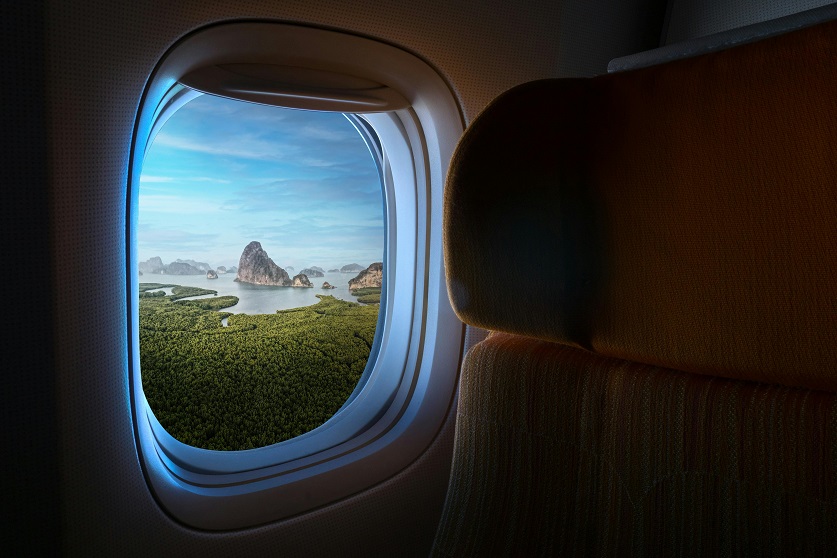
Are you getting ready for your first flight? Then this guide is definitely going to make your first airport visit a stress-free one. Keep reading for a step-by-step guide packed with curated travel tips for first-time flyers.
I’ve navigated countless airports, and I know exactly where new travelers get overwhelmed. From navigating the airport to finding your seat, let’s make sure your journey starts with a clever plan and ends with a great memory.
This guide covers:
- Essential Things to Check and Prepare
- Luggage Limits and Fees
- When to Arrive at the Airport
- Online Check-in Benefits
- Physical Check-in Hacks
- Passing Security in a Breeze
- How to Easily Find your Gate in the Airport
- From Gate to Seat: Boarding Like a Pro
- In-flight Comfort Hacks
Essential Things to Check and Prepare
The secret to a stress-free journey is preparation. The most critical step in your checklist is ensuring your documents are ready and valid.
For international trips, make sure your passport is valid for at least six months after your return date and make sure you got any necessary visas or Electronic Travel Authorizations (ETAs) well in advance.
For all flights, have your boarding pass (digital or printed), a form of valid photo ID, and your travel insurance details easily accessible. As one of the top travel tips for first-time flyers, it’s wise to make digital copies of these essential documents and store them securely on your phone.
Next, make sure you’re packing your carry-on bag smartly. This bag should have all your absolute essentials in case your checked luggage is delayed.
You must have items all are your prescription medications (kept in their original containers), a portable charger for your phone (check your airlines’ rules for allowed capacities), comfort items like a travel pillow or compression socks for long flights.
Remember to comply with the airline’s rules on batteries and liquids—generally, containers must be 3.4 ounces (100ml) and keep a pen handy for customs forms.
Luggage Limits and Fees
A crucial aspect of effective trip preparation is understanding the baggage policy of your airlines, as exceeding limits can lead to surprisingly high fees.
For checked baggage, the industry standard for most major carriers is a maximum weight of 50 pounds (23 kg) per bag and a total linear dimension (length + width + height) of 62 inches (158 cm). While budget airlines often have lower weight limits, sometimes as low as 40 pounds (18 kg).
Carry-on baggage is typically one main bag that fits in the overhead bin and one personal item (like a backpack, purse, or laptop bag) that fits under the seat in front of you. Standard carry-on dimensions are around 22 x 14 x 9 inches (56 x 35 x 23 cm). While many airlines do not have a strict limit for carry-ons, some international and budget airlines cap it at 15–22 pounds (7–10 kg).
Note: You should check your airlines’ policy as well your ticket for accurate weights and dimensions.
When to Arrive at the Airport
Knowing exactly when to arrive at the airport is the ultimate hack of stress-reducing travel tips for first-time flyers. The general rule of thumb is determined by whether your flight is domestic or international.
For domestic flights, the standard is to arrive at the airport at least two hours before your scheduled departure time. This gives you enough time to navigate traffic, check in your baggage, and pass through the security screening process without running through the airport.
For international flights, you must arrive even earlier because of the mandatory additional procedures. Airlines universally recommend arriving at least three hours before your scheduled departure time. This extra hour is due to the longer lines often found at international check-in desks, the necessary time for customs and immigration checks, and more thorough security screening.
Always check your airline’s specific advice for both domestic and international flights check-in times.
Online check-in Benefits
Online check-in is typically available 24 hours before departure and it greatly reduces your time spent waiting in lines. By checking in via the airline’s web platform or app, you skip the crowded main check-in counter and can proceed directly to security if you only have a carry-on bag. Even with checked luggage, you use the faster line.
Beyond saving time, checking in online allows you to select your preferred seat (like a window or aisle) and sometimes allows you to pay for any baggage or special services at a cheaper rate than what the airport counter charges.
Physical Check-in Hacks
To ensure your counter process is lightning-fast, keep your documents handy in advance. Before even approaching the line, have your physical passport or photo ID, a printout or mobile display of your booking confirmation code, and all necessary international documents (like a visa or printed ETA) in your hand, not buried in your bag.
You can ask the agent for a window or aisle seat, and if it’s available, he’ll likely help seat you wherever you want. Also, make sure your checked bags are within the weight limit before you leave home. If a bag is overweight, the agent will require you to repack, which believe me dramatically slows down your check-in and the entire line behind you.
Passing Security in a Breeze
One of the most important travel tips for first-time flyers is to dress for success: wear simple and easy to take off shoes and avoid huge jackets, belts with large metal buckles, or excessive jewelry that will need to be removed.
As you approach the scanner, have your boarding pass (mobile or paper) and ID or passport ready in your hand for inspection. Empty your pockets of everything—keys, coins, phone, wallet—and put them immediately into your carry-on bag to prevent fumbling and slowing down the line.
The second vital hack is to have your carry-on bag ready for easy scanning. Pack your laptop in a dedicated side pocket and keep your quart-sized bag of toiletries right at the top of your bag or in an easily accessible pouch.
When it’s your turn, rapidly place your coat, shoes, laptop, and the clear liquids bag into separate bins while your main carry-on bag goes through the X-ray machine. By being ready to unpack instantly, you can move smoothly from the security line to the airside terminal.
How to Easily Find your Gate in the Airport
The single most important tip for finding your gate in the airport is keeping your cool while checking the Flight Information Display (FID) screens immediately after clearing security.
While your boarding pass has a gate number, it is only a preliminary assignment and can change at any time for operational needs.
As soon as you are airside, locate the large departure boards, check your flight number, and confirm the gate. The gate number typically consists of a letter and a number (e.g., A15 or C42). Check the gate again 30 minutes before boarding time.
Once you have your confirmed gate number, follow the directional signs first, explore later. Personally, I have to see that the gate actually exists with my own eyes, then shop later!
Airport gates are usually grouped by letters (called terminals). Follow the overhead signs that point to your gate letter (e.g., “Gates C1-C50”).
Only after you’ve verified the flight number on the screen at the gate itself should you relax and venture out for food or shopping. Personally, I have to see that the gate actually exists with my own eyes, then do whatever I want later.
From Gate to Seat: Boarding Like a Pro
The tip to a smooth journey from the gate lounge to your seat is knowing the boarding order. Most airlines board passengers in pre-assigned groups (often numbered or lettered) to avoid congestion.
Always wait for the gate agent to announce your specific group number, which is printed on your boarding pass, before getting in line. Typically, priority passengers (First Class, Business, or those needing assistance) board first, followed by specific groups.
Once your group is called, get your boarding pass and ID/Passport ready for the gate agent to scan. When you enter the plane, a flight attendant will likely check your pass and point you in the direction of your seat row.
The crucial “pro” trick is to stow your overhead bag quickly above your assigned seat, and move out of the aisle immediately. Place your smaller personal item (backpack, purse) directly under the seat in front of you. This way, you help keep the boarding process moving smoothly for everyone.
In-flight Comfort Hacks
Feeling comfortable during a flight, especially for long-haul journeys, requires a few clever hacks that are key travel tips for first-time flyers.
The first hack is to prepare your sleep environment. This means getting a high-quality travel neck pillow for proper support, along with noise-cancelling headphones (or earplugs) and an eye mask to block out light and noise. These small accessories create a personal and peaceful bubble for you.
The second crucial hack is taking good care of your wellbeing. The dry, pressurized cabin air can be dehydrating, so your best defense is to drink enough water throughout the flight.
For long flights (over four hours), wearing compression socks is highly recommended to help maintain good blood circulation and prevent uncomfortable swelling in your feet and ankles. Remember to get up and move every hour or two.
Flight attendants can also get you some items you might need for a more pleasant journey, which are often complimentary, especially on long-haul flights:
- Extra Comfort Items: Ask for an extra blanket or pillow, especially if the cabin is chilly or you plan to sleep.
- Over-the-Counter Relief: They carry basic first aid supplies like Band-Aids, as well as common medications like pain relievers or tablets for motion sickness.
- Hydration and Refreshment: Don’t hesitate to ask for a refill of water or another can of soda. They can also get you hot water to warm a baby bottle or for tea/instant coffee outside of the main service.
- Toiletries: On long flights, small amenities like a dental kit, eye mask, or earplugs are often available upon request.
Ready for Takeoff!
Congratulations! With these top travel tips for first-time flyers, you’re now prepared to tackle your first trip with confidence.
From securing all necessary documentation (passport, visa, and boarding pass) and understanding your airline’s luggage limits to strategically using online check-in to bypass long queues, every step is designed to save you time and reduce stress.
Keep in mind that arriving early is non-negotiable, and treating security and boarding like a streamlined process—knowing what to remove and when to line up—is the most important trick for a flawless journey.